
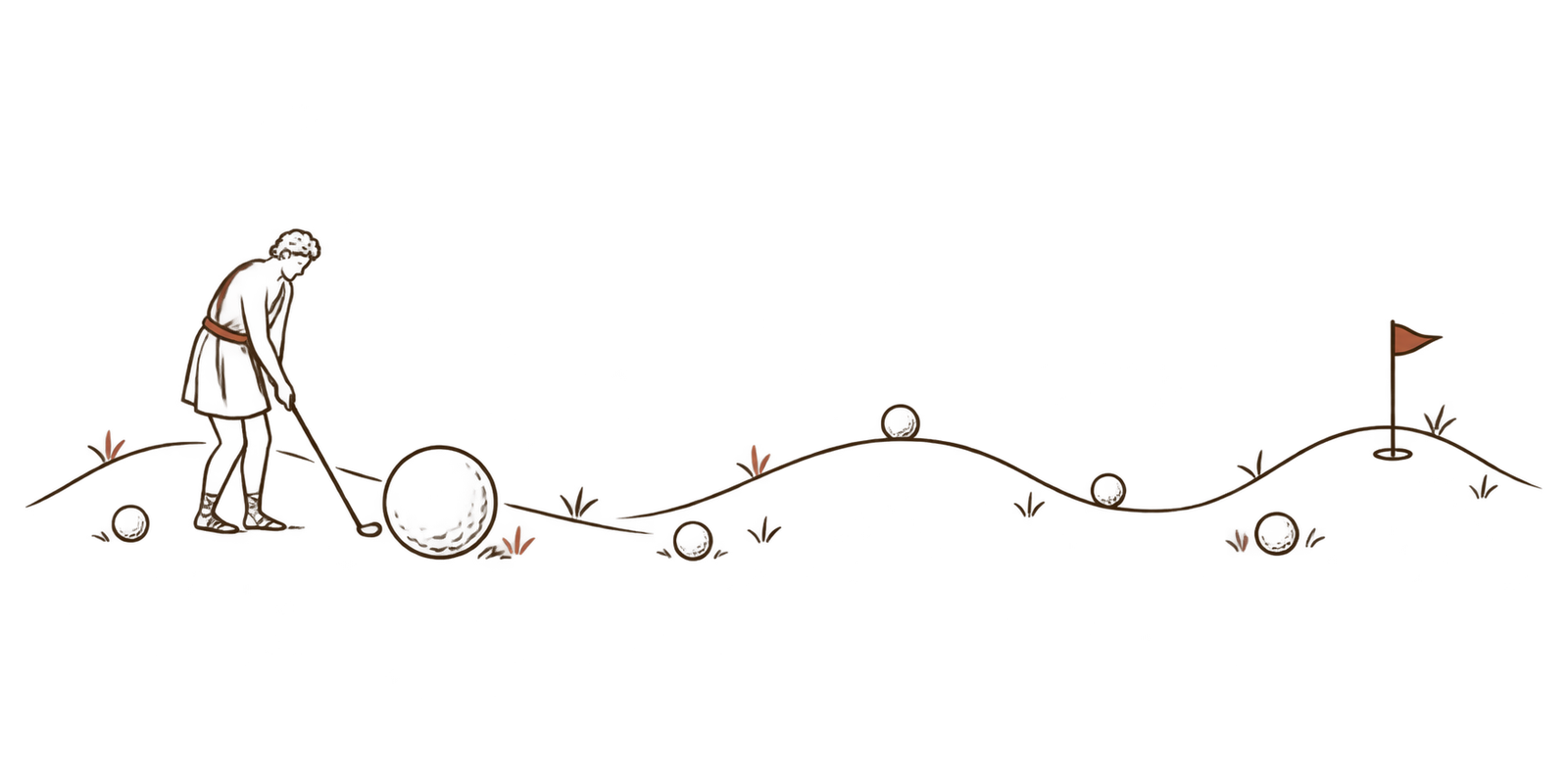
Wanting to do things, wanting to achieve things. I don't think you're unfamiliar with this, and I think you'll understand me, especially if you're fickle. Actually, it might stem from a nagging feeling of inadequacy, or perhaps an overly optimistic visionary perspective. While I believe wanting to achieve things is perfectly natural, I'm currently experiencing how exaggerating it, as I do, can be quite harmful.

Will Poulter — Bandersnatch
My middle school years were spent trying to find time for the things I wanted without understanding the importance of time. My lonely moments were usually spent in front of the computer, a place where I felt free, which could make strange noises and sometimes worry us. I felt more connected to the internet than to the city or home. During unhappy times, I would adjust myself according to when my next computer session would be, planting seeds of hope in my own way. My defense mechanisms extended from the ADSL connection to our computer, isolating me from the world around me for hours, even days.
Before I assigned material values to my time, in the period when I simply explored things for my own pleasure, what I did was actually far more priceless.
During high school, I gradually realized that what I was doing could turn into a profession. With increasing socialization and the courage to leave 'my father's school' and step into a different one, I began to show more interest in my studies, thanks to my attempts at becoming an individual. I started to adopt more pragmatic approaches and tried to learn everything – no, I should correct myself. I wasn't trying. I just wanted to, I wanted to learn most things. Wanting, as you know, doesn't always help much, so I'm not sure if I didn't want it enough or if my desires were victims of my lack of discipline. Many of my peers shared the same fate; this fickle appetite, stemming from the ease of access to information and a quick boredom, can drive you crazy if you're already fickle. I don't know how many times I started learning Spanish and gave up immediately during high school, even before I knew English. After high school, since there was a large group of language enthusiasts around me, I witnessed many people doing the same thing, which is probably why I don't feel guilty. We all get excited about things, and then our enthusiasm fades away.
After that, it was just a matter of me leaning over and looking in the direction the wind was blowing, and then starting to walk in that direction. Choosing the language department, wanting the department and city that would make the most sense for me, settling there by chance, and so on. But as I mentally wrote down my desires one after another, I'm only now beginning to realize that I'm doing it far too greedily. When we're young, we think we have all our time, I guess. We do have all our time, but it's probably not something we can easily turn upside down. No matter how much I try to turn it upside down, I haven't yet reached the peace of mind that comes from not having succeeded yet.
When we have all the time at our disposal, our desires naturally don't end. For example, I remember sometimes hoping that my self-deprecating self could miraculously transform into a much better version of myself over the weekend. I've often thought, without realizing it, that feeling insecure on Friday could allow me to nourish myself over the weekend and start the new week as a new person. Of course, that never happened, but I was surprised at how unrealistic my optimism was back then. Perhaps the reason for this optimism was that, like many of us, I built my dreams on the assumption that I would achieve my goals within a certain timeframe, and that's what created the problem.
My fickle nature led me to believe that many things would fall into place, be learned, and achieved by the time I finished university, and I didn't harbor any dreams about what came after. I rushed through university without any vision beyond 22, and of course, I was quite anxious in the process. Therefore, from the middle of my third year onwards, the anxiety of approaching the final year began to haunt my dreams, like a bitter sauce sprinkled on top of my inability to stay in the moment. With no other option but to accept it, I got through the last year and finished school without fully accomplishing anything I had once dreamed of. To finish, I would have needed 6-7 clones of myself, all working simultaneously and efficiently, something I've mentioned from time to time. Since these were unrealistic desires, I didn't face any backlash, except perhaps myself. Now, however, I'm slowly realizing that with my full-time job, I'll have to give up on most of these desires.
My desires weren't just about producing things. Yes, there were several languages I wanted to improve, multiple musical instruments to express myself freely on, and countless software programs. Beyond that, there were countless books, films, and content saved on various platforms to be read at some unknown date, and job postings waiting for me. Given that failing to keep up has become our most common habit, how right was it to inflict this suffering on oneself? Of course not, how could it be? Of course, coming to terms with this is a virtue, and identifying the underlying reasons for these seemingly unattainable goals is equally important. Fortunately, while identifying these reasons, I might also be betraying my own peace of mind by thinking I can achieve some of them. We'll learn this through experience.
Originally published on Medium on September 16, 2020. English translation of “Z Kuşağı ve Gerçekdışı Vizyonerlik”.