
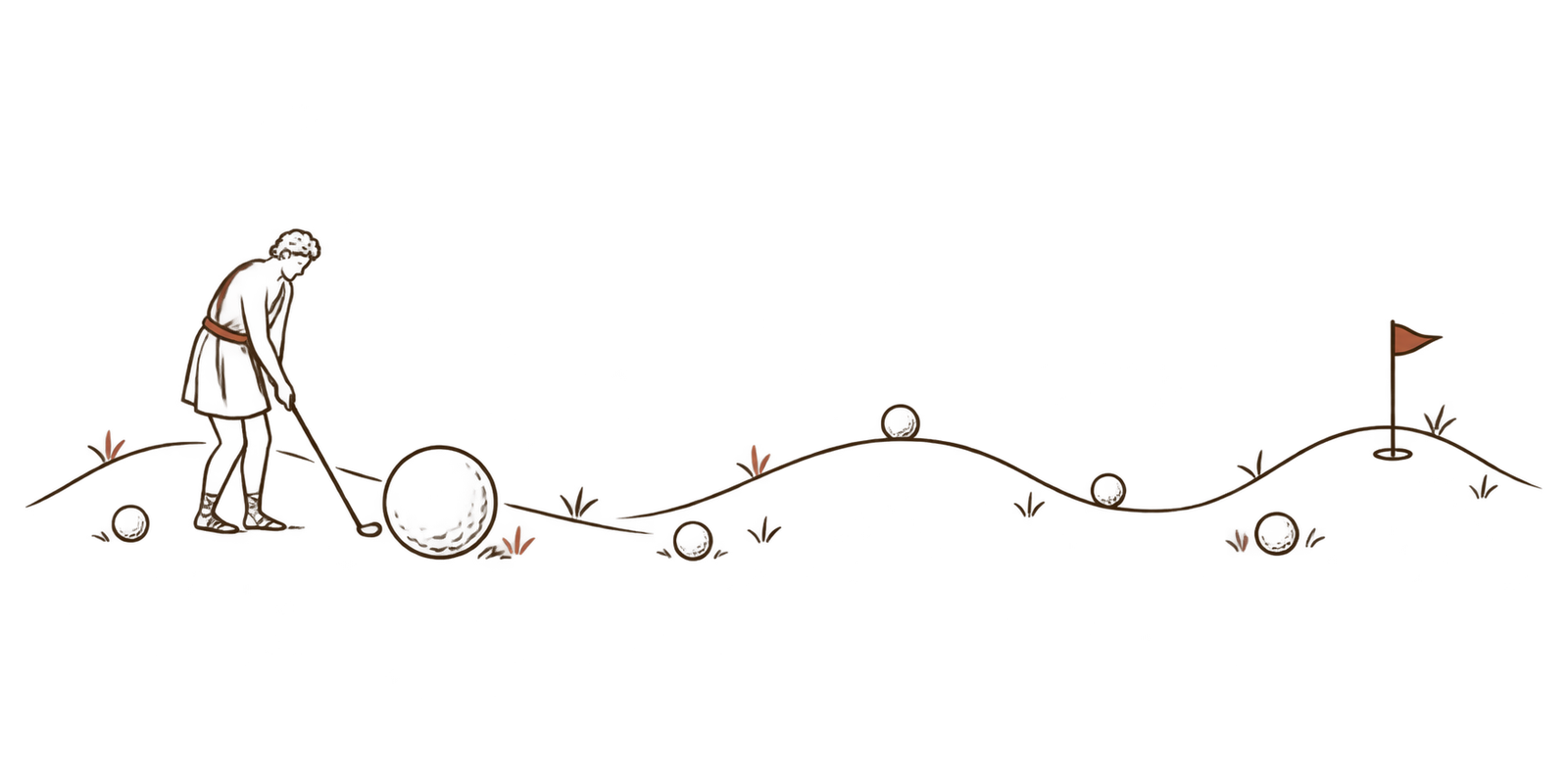
welcome to my morning pages in which i discuss where Warner Bros. Acquisition takes us, and what does it mean when it comes to the concept of “taste”.
Would you like to watch this piece instead of reading? Then here it comes! If you’d like to stick with reading, keep going!
We see that the major names keep collapsing into larger groups. Last week, we saw the the news of Prada absorbing Versace. Energy firms expand by acquiring rivals. And now, when we least expect it, Netflix has announced that it will be acquiring Warner Bros.
The “Film Twitter” environment, especially, is in shambles. Here is a tweet I saw today that made sense:
It seems like most people aren’t happy by this news. I have seen somebody blaming all this on Kevin Spacey which made me smile. But how Netflix announces this also make us think. They are announcing it like it’s now a done deal on social media channels, when the acquisition is agreed on paper but not completed. Closing depends on regulatory approval and a major corporate separation, with an estimated timeline of 12 to 18 months as Netflix says.
What most people are upset about is that the pattern we are seeing here. Netflix assures us that Warner Bros. will keep its ongoing style and commitment to theaters, but people do not count on that. The pattern shows us something different: more and more decisions are being made by a smaller cluster of firms with global reach. That is what we are afraid of the most.
It can get political, and it can get personal. We, of all individuals, would like to think that we have our own taste to savor from life. But in reality, now more than ever, our taste is being manipulated just like everything else running around our minds. Taste is becoming harder to build, and harder to keep. It becomes harder to build not only because we are bombarded with what they want us to like, but also because our patience for building taste is scattered and in shambles.
Maybe we should understand “taste” a little bit first. We often confuse “taste” with “preference.” Preference is a biological thing, and it’s instant. Such as you eating chocolate, and liking it because it’s sweet. Whereas taste is acquired, it is built like a big chateau in your mind, curated with your own terms and collections from the world. It is a muscle that must be torn in order to grow.

Pierre Bourdieu, the author of Distinction, and various psychologists suggest there is a specific cycle we must go through to acquire the thing we call “taste”.
- Exposure
First, of course, you have to be exposed to the thing and it’s difficult at first. Think of it like a bitter expresso, a tiring jazz song, or a slow, hard to understand foreign film. It’s difficult to grasp, difficult to enjoy. You look at it with squinting eyes out of confusion, not by your myopia. If you have myopia, add that too. - Friction
Your initial response is not pleasure. It is mostly confusion, or boredom. You might even dislike it. Remember the first day you tried coffee, or better yet, alcohol! You must’ve hated it. What’s all this fuss about this nonsense? It tastes worse than medicine! - Contextualization
Then if you prefer to explore it, you force yourself to stay with it. You give it a chance. You are willing to wait to see if it’s a fuss or a real thing. - Acquisition
The friction we mentioned, the distaste, the inconvenience of not understanding what is there, transforms into pleasure. What a magical thing, for perceptions to be able to transform, right? The world is a magical series of games, innit? Nothing is definite. You have rewired your brain to understand and enjoy the complexity in this stage.
Now, you might object to Bourdieu and say: “Well… This is basically forcing our tastebuds to get used to a bad dessert! You can get used to anything and enjoy bad things as well?!”
Oh yes, I will be agreeing with your objection. Totally, one hundred percent! You said it right. We can definitely force ourselves to enjoy questionable or horrible things. (That’s how some fetishes take place, right? But I’ll shut up on that before I’m cancelled for unauthorized psych-talk). And we need to take that into account when we’re looking at the world we are in right now. There, we should see a difference between how true taste is acquired compared to how bad taste is acquired.
The bombardment with the ‘bad dessert’ with lots of artificial sugar that poison you can also make you addicted to it. You stop fighting, or you were not fighting in the first place and just accepted it. It’s passive, whereas acquiring “true taste” is active. There is a pursuit of good, of better. You are seeking something, and seeking means effort. Remember Sisyphus here: effort means it’s hard. But it’s also pleasurable. The pleasure comes from the never-ending effort itself.
The terrifying difference between ‘Acquiring Taste’ and ‘Surrendering to Repetition’ shows us how the external world, as of today, the world of mergers, mega-corps and algorithms, as a result individuals working for those specific algorithms enter the room and steal our true will from us by force.
Remember that the crucial stage, friction, requires you to stay with the uncomfortable feeling of not being able to enjoy something first. We do not have that in our lives anymore.
Because if something is confusing you, it does not deserve to be kept visible on platforms, and as a result, our brains got lazy. Everything should be engaging, it should be entertaining immediately for you so that you would watch it and you would stay in that platform just a bit longer. That’s the main aim behind algorithms. These algorithms are also the reason why we do have a thing called “Popcorn Brain”, a brain that needs constant stimulation.
When you finally do stumble upon something complex (a challenging book, a unique piece of art), you can’t sit through the “boredom” long enough to reach the “acquisition” phase. But this acquisition of Warner Bros. might make it harder for our “acquisition of taste” to survive.
The giant corporations are paving the road so smoothly that we never feel a bump. But the ‘bumps’ were where we used to find the interesting things.
The giants would not want you to question your sense of taste. They want you to use the “Color of the Year” for your designs, for the scarves you put on, for the interior of your flat.
The massive consolidations we are seeing today are essentially all Friction Removal Machines. We are constantly removing the bitterness from the espresso so that more people will drink it much faster.
I saw another tweet recently that compared the pacing of old cartoons to modern ones. In the older cartoons, there were moments of silence, build-up, calmness. Characters walked across a room. There was “dead air.” There was space for your mind to wander, to predict, to breathe. It was a form of accidental mindfulness.
Today’s content is mostly sensory assault. Constant movement, constant noise, cuts every two seconds. No silence is allowed. Why? Because silence is a form of friction. Silence is a risk. In silence, a viewer might realize they are bored and click away.
If we are raised on content that eliminates the “waiting”, how can we possibly develop the patience for the “acquisition” phase of taste later in life?
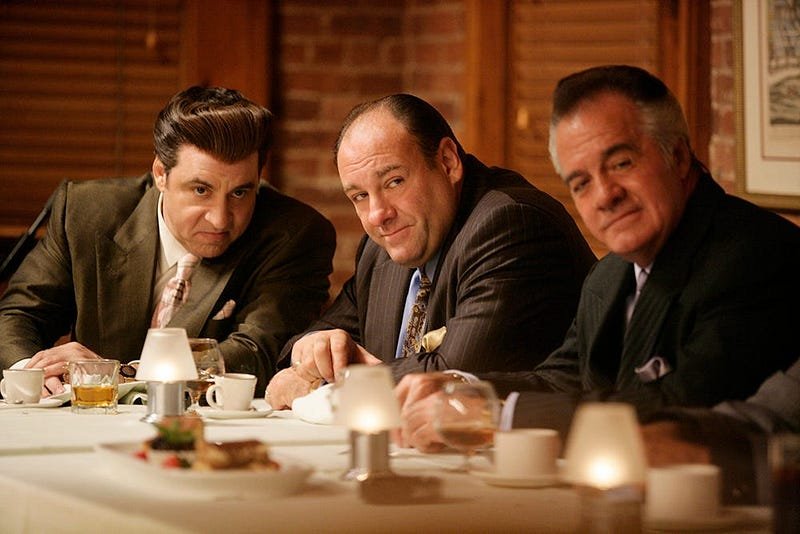
Now, The Sopranos lovers are worried that the golden age of “difficult” television is over, that the home of Tony Soprano will be flattened into just another algorithm-friendly content factory.
Our “last castle” might be the new series “Pluribus” airing right now on Apple TV, starring Rhea Seehorn and directed by Vince Gilligan. But even for that, I worry. I worry that people will get bored of its slow nature, which is necessary friction, and tune out before Vince even makes his point like he made very slowly and deliciously in Better Call Saul.
And here is the irony: This gluttony might poison the giants too. By swallowing a massive dinosaur like Warner Bros, Netflix, once the nimble disruptor, risks becoming a dinosaur itself. Bloated, slow, and obsessed with safety.
In the end, nobody wins. We lose our taste, and they lose their soul.
Originally published on Medium on December 21, 2025.