
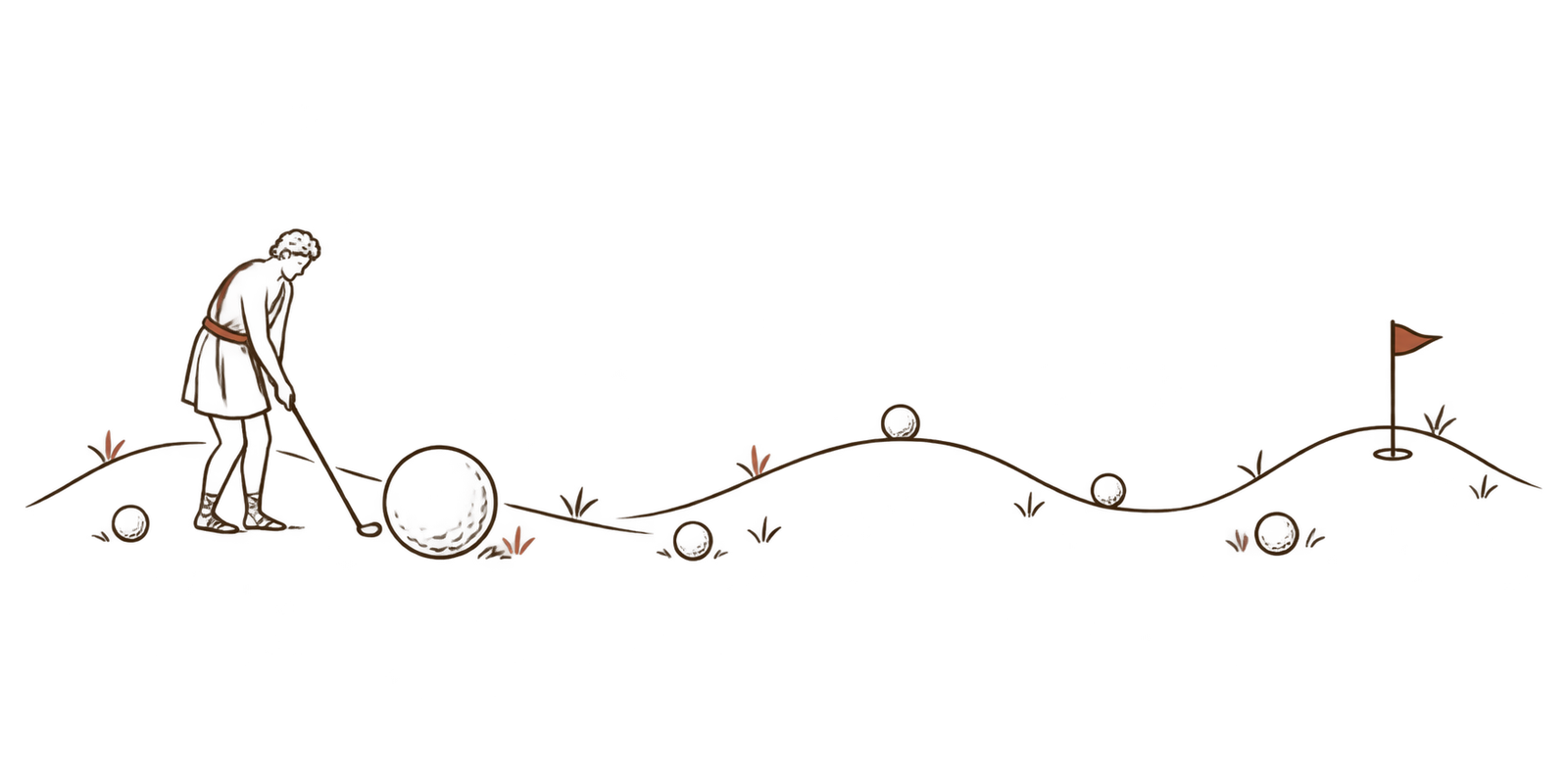
Towards the end of my four-year university life, although I had taken relevant courses for two semesters and naturally still didn't consider myself proficient enough, I was aware that we rarely needed such detailed information in our professional lives. However, I learned how important communication is after my first experience.
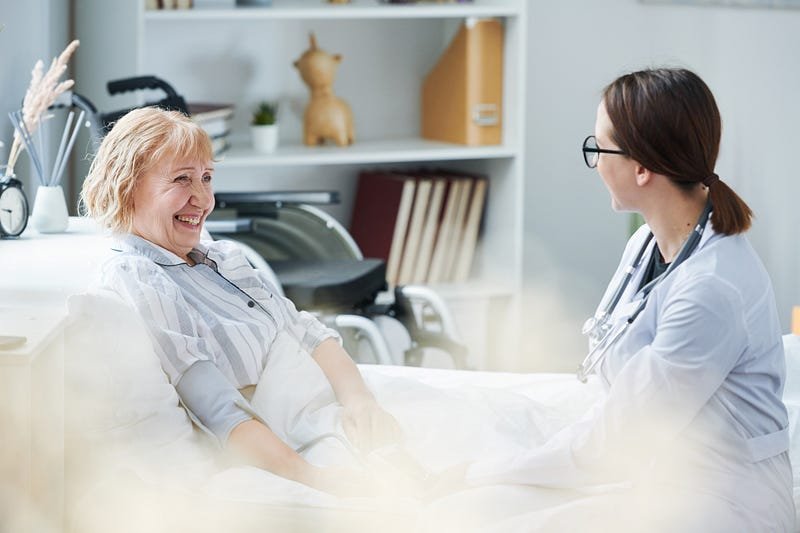
Photo: Pressmaster
First of all, this field, which I thought would interest many students, had certainly piqued my interest as well. From the very first lesson, our professor introduced the subject matter and word origins in a way that would pique the interest of students with a general knowledge background. I remember going home and transferring my notes to my computer, my enthusiasm having just been rekindled – an enthusiasm I often felt, but which I lost track of as my workload increased. I think I experienced a similar pleasure about a year earlier when I took a Latin class and discovered the origins of many words we knew. We started by examining why medical terms we all know or have heard of are named that way, tracing their origins from prefixes to word roots, and continued with systems. We learned about the anatomy of systems, then their pathologies, and finally their common treatments. I think I can say that we all enjoyed it as a class.
After taking countless notes under the guidance of our idealistic professor, exam time was naturally a bit challenging. Normally, I place unnecessary importance on my notes; I prefer to organize the notes I've taken in my notebook into separate A4 sheets by topic and file them. However, because I'm not a very diligent student, I rarely manage to do this properly, always ending up with incomplete but impeccably detailed notes. This course forced me to move away from my meticulous note-taking approach and rely on my existing notes, because otherwise I would probably have had to retake the course.
You know, writing isn't exactly the same as studying; people can produce excellent notes even when their minds are elsewhere. In our world where perfection is impossible, I gradually started to move away from my perfectionism, and together we managed to get decent grades on the exams. I still remember the final exam; it was a long one, consisting of diagrams, tests, puzzle-like activities, and written sections spread over 10 or 11 pages. Of course, we got through it somehow. In the next semester, in the Health Translation course, we moved away from details a bit and focused more on practice, on the oral translation part. After reading the relevant literature, we examined, derived, and translated various dialogues.
In summary, I can say that the courses we took under the title of Health Translation and Medical Translation were the most informative courses we took throughout university. About a year after these courses, I met a company working in the field of Health Tourism. Due to our hospitals being relatively more affordable compared to abroad, and their less crowded waiting lists or policies, Health Tourism has naturally started to create job opportunities primarily in Istanbul and then in other major cities. Turkey has become one of the most preferred countries in this regard.
The top five countries in the world in terms of the number of international patients are, in order: the USA, Germany, Thailand, India, and Turkey.
Perhaps for this reason, some private hospitals employ translators who can provide services when needed, or even hire these translators full-time if necessary. Although I haven't yet dared to pursue this full-time, when an opportunity arose through Medical Tourism to accompany a patient solely during their treatment, I wanted to take advantage of it. Before discussing the operation, I think I should also touch upon what Medical Tourism is.
Medical tourism, in short, refers to individuals visiting a country other than their own for the purpose of receiving preventive, curative, rehabilitative, and health-promoting services. Medical tourism is a sector that enables the growth of healthcare institutions by leveraging the potential of international health-related mobility. (p. 38)
The first operation I encountered was obesity surgery, commonly known as stomach reduction surgery. 'Gastric Sleeve Surgery' can only be performed on individuals with a body mass index above 40 kg/m², and I must say it's a very challenging operation. In short, 80% of the stomach is removed, and the person reaches their ideal weight because they feel full more quickly due to the smaller stomach. Because different parts of the stomach absorb nutrients differently, the patient may need to take certain nutritional supplements via injection for the rest of their life; for example, our patient will continue to receive their B12 requirements via injection.
Regarding my first experience as an interpreter, I must say that my first difficulty came with the dietitian. I encountered terminology that people around me, who are much more knowledgeable than me and already read in both languages, could easily handle if they were in my place. Naturally, the dietitian explained everything in Turkish, and I conveyed it to the patient in English. The attitude of both the doctor and the patient can be quite helpful during this process. As long as the patient is willing to understand and the doctor is willing to explain, the interpreter getting stuck on one or two terms doesn't pose a problem. Before surgery, different departments in the hospital need to conduct certain tests and examine and approve the patient's condition.
After obtaining approvals, primarily from the dietitian, we sent our patient off to surgery. A brief prior research I did about the surgery only helped me better understand the process; I can't say it significantly improved my interpreting skills. However, simply being present alongside the patient, facilitating communication, isn't enough. Because it's a daunting operation, the patient wants to feel safe. Regardless of the difficulty of the surgery, undergoing surgery in a country where you don't speak the language is certainly not easy. In this respect, interpreting is more effective when you can connect with patients, communicate easily, and give them encouragement. This operation was a valuable experience for me; while waiting for my turn, we discussed Brexit, Turkey, and EU issues, covering everything from the country's population to shopping opportunities. I believe this strengthened our communication and increased their trust in me and, consequently, in the hospital. A better understanding of the procedure also helped me understand the patient better, which was another factor in strengthening our communication. Another issue that might have been challenging was getting the consent form signed, but I can say I was lucky in that regard. Although we had done consent form translations in class, I don't think it's very pleasant for a patient to sign a consent form that hasn't been translated into their own language. Since translating or explaining pages of consent forms at that moment would be very difficult, I hope such a thing doesn't happen to me, but if it does, I hope I'll have time to resolve it. The consent form that needed to be signed had already been translated into English, and we only needed to ask the doctor about the parts we didn't understand. Of course, the patient didn't sign without reading every single page.
I had learned beforehand that gastric reduction surgeries generally last 1-1.5 hours, and the doctor had informed us that the surgery would take around that time. The surgery took a little longer than we expected, and after the surgery, the patient was kept in the intensive care unit and then brought to their room when they regained consciousness. Due to the coldness of the operating room and the anesthesia after the surgery, the patient felt very cold and nauseous. Since we were informed about this, we weren't worried; we tried to make the patient as comfortable as possible, asked for blankets, and covered them. Immediately after surgery, especially with the pain, the feeling of security I mentioned earlier is extremely important. While the nurses were cleaning the patient's bed, they asked everyone to leave the room, and at the patient's request, I stayed and tried to help the nurses. During this time, one of the nurses complained that she understood everything but couldn't speak. I wanted to encourage her to talk, but in the rush of the moment, there wasn't much time. Sometimes, it's both sad and encouraging that we can't do things we are capable of simply because of our fears.
We tried to comfort our patient, who wanted more blankets and painkillers, and ordered kidney-shaped bowls used as vomiting basins. We tried to provide emotional support until the patient's pain subsided. Although it was a technically straightforward process, I must say I was a little emotionally affected. While maintaining composure is paramount, I believe a healthy dose of emotional sensitivity strengthens communication with the patient. Even the inability to tolerate the sight of blood can complicate things; of course, I'm sure there are plenty of medical interpreters working in situations where seeing blood isn't necessary. In highly professional translation environments, I don't think either emotional connection or composure is necessary. However, in situations requiring direct communication like this, as one might expect, these things are important. Maintaining communication with the patient after their return to their country is also crucial; this stage will naturally unfold for staff who don't view patients solely as customers. The smooth outcome of my first experience has encouraged me to consider working in this field. I thought that writing about my initial experiences in this way could contribute to both students studying in this field and those who want to work here. I hope this has been helpful to someone, and I extend my sincere thanks to those who took the time to read it.
Reference:
General Directorate of Health Services. Regarding Health Tourism .
Tontus, Omer. (2019). What is Health Tourism?
Originally published on Medium on September 12, 2020. English translation of “Sağlık Çevirmenliği: Derslikten Hastane Ortamına”.