
Dear readers,
the FTX scandal last week . If you haven't read it, you can listen! I explained what happened in a way everyone can understand. You can click to listen on Apple Podcasts or Spotify !
Listen or view the original embed ↗
We've seen that most of these problems stem from company management. This week, we'll focus on the causes of such scandals and what can be done about them.
Years ago, following the financial crisis of 2008 , blockchain systems emerged, drawing lessons and inspiration from that crisis. While the philosophy behind blockchain is decentralization, we often forget that the platforms everyone mistakes for blockchain due to their ease and accessibility are often centralized , managed, and offer little power or freedom . The crypto ecosystem initially promised freedom and the ability to conduct transactions without intermediaries. It offered a unique and different system compared to traditional finance.
The Curses of Centralization
a well-known and generally accepted fact that power breeds corruption and decay . When you give someone control of your money, and many others do the same, the likelihood of that trust being betrayed increases. This is also true in the financial world; power naturally grows when concentrated in a single hand. However, when that same power is distributed among all contributors, it's not the power of the monopoly that grows, but the power of the system . This is where governance systems like DAOs , brought to our attention by cryptocurrency projects, come to mind.
Let me explain this situation with an example that will sound quite familiar to you today. Imagine you work for a company; your hours are fixed. Your salary is fixed, and your bonuses, if any, are also roughly fixed. Although there are people among us who enjoy their work, who can form a connection with what they produce, and who consequently find greater spiritual satisfaction, we must sadly remember that most people working in the modern world do not have this opportunity. Perhaps you hate your company, or you don't respect the values it represents. Yet, you are selling a part of your life to them for a certain fee.
As a result, you become alienated from both your labor and the resulting product, and you lead a more unhappy life. Moreover, your labor doesn't grow exponentially; you earn the same amount, and if you're lucky, you can retire. However, it's important to remember that not every business model works this way .
As you contribute, you can have a salary that will cover your expenses, and a more satisfying retirement by receiving a percentage of the product you contribute to, and increasing this percentage day by day with your labor.
this topic without mentioning the new model introduced by Kadir Köymen . In his Carbon Model , employees earn shares in the company as they contribute to it. This is actually quite an inspiring and sustainable business model, because as an employee, you become more inclined to want the best for the company whose shares you own. For example, you work much more efficiently during working hours and don't slack off. Because if you are inefficient, you will pay the price in the future by owning less, and perhaps even less, shares. Therefore, everyone acts like they own the business and works in the most efficient way, and the company's sustainability increases. You achieve greater satisfaction because you are productive and not slacking off, and your share grows.
Perhaps, to have a more comfortable retirement in the future, every employee is choosing to take a lower salary and be less wasteful . They're adopting a lifestyle of low, efficient spending and high satisfaction . Imagine a world where everyone does their job diligently and lives that way; how wonderful and different everything would be, wouldn't it? We can learn a lot from these business models, and it encompasses much more than just making a profit financially.
Listen or view the original embed ↗
DAOs , which we mentioned earlier , represent a similar form of governance. In these self-governing systems, each member's goal is to advance, develop, or profit the system ; therefore, as in the carbon model, each member works for the good of the system and is rewarded for their efforts. As a DAO member, you earn governance tokens , also known as "government tokens," as you contribute to the organization, and through these tokens, you participate in the company's decisions.
The more effort, the more power.
The more governance tokens you own, the more votes and power you have in decision-making. You can also contribute in ways that serve the system's needs and requirements; for example, if design work is needed, you can do it, thus increasing your contribution. You can earn even more tokens by providing software support.
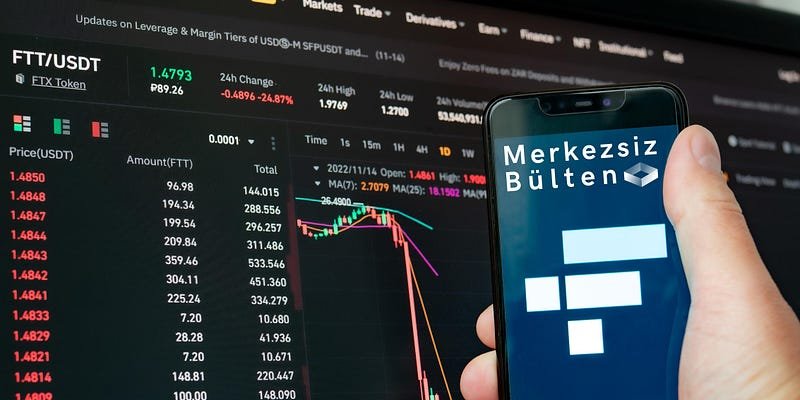
Decentralized Bulletin — The Curses of Centralization
centralized exchanges , which operate quite differently , for a long time, as they offer a much easier way to invest in crypto assets. However, it's important to remember that thousands of people have been victimized by scandals on these platforms, which have shown us how our reliance on centralization can lead to problems. The connections that can be made between these events and the problems that followed illuminate the path forward, and we now see more clearly how centralized platforms can create systemic problems for the crypto ecosystem .
Some have already begun describing November as the end of the centralized era . Therefore, a return to the philosophy that shaped the crypto world is imminent, and this could result in the rise of decentralized finance ( DeFi ). If you'd like to learn what decentralized finance is, how it works, where it originated , and the lending processes within the system , we recommend checking out our related newsletters.
Speaking of recent developments, Emin Gün Sirer , founder of Ava Labs , discussed the impact of the FTX crash on Avalanche . He stated that the damage to the market actually began long before the crash, through the excessive inflation of certain coins via Ponzi schemes.
https://muhabbit.com/ava-labs-kurucusu-ftx-borsasinin-cokusunun-avalanchea-etkisini-anlatti/
Speaking of Avalanche, let's also add that it entered the Asian market by being listed by Coinbase Japan. AVAX will expand its reach thanks to its presence in Japan.
https://muhabbit.com/avalanche-avax-coinbase-japan-taraftan-listelendi/
Recently, we witnessed a new scam facilitated by Airdrops . The attacker sends very small amounts of tokens to the addresses of many victims, adding transaction and wallet numbers that closely resemble the victim's address to the victim's wallet history. The attacker chooses a number that looks almost identical , differing only by a few digits. This causes the victim to copy the wrong address when trying to process a transaction, resulting in the loss of a portion of their assets.
https://u.today/scam-alert-new-way-of-stealing-coins-through-airdrops-emerges
That was this week's events; we hope you have a peaceful and wonderful day and that it inspires you on your other days.
If you'd like to connect us with people who might be interested and enjoy reading our content, you can use our link: bit.ly/merkezsizbulten
Additionally, you can stay updated on developments throughout the week by following our Twitter profile.
See you next week,
Decentralized Bulletin
Originally published on Medium on November 21, 2022. English translation of “Merkeziyetin Lanetleri”.