
2020 Rationalist.org — Evolution Tree content
In December 2019, Chinese authorities reported that a virus had spread from their country to the rest of the world. In the following months, it spread to other countries, doubling in cases within days. This virus is the Severe Acute Respiratory Syndrome Coronavirus 2, which causes the disease known as COVID-19, and is commonly referred to as coronavirus. Technically, the disease is called COVID-19, and the virus is called SARS-CoV-2. Beyond what has been discussed, we will examine in detail and clearly what happens when you get infected and what you should do in this article. Happy reading.
What is coronavirus?
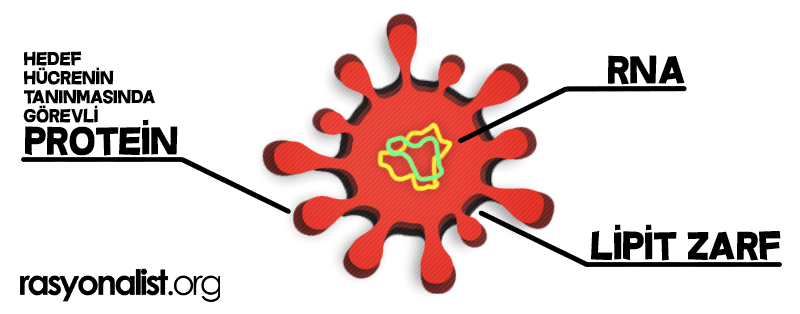
What is called a virus is actually a shell with a few proteins surrounding genetic material, and whether it is even a living thing is debatable. However, it can reproduce by attaching to a living cell. Coronavirus can spread through surfaces, and according to a study published by the American Centers for Disease Control and Prevention (CDC) [1], observations made on a cruise ship concluded that the virus could survive for 17 days. However, it is still unknown whether it is possible for the virus to infect humans even though it can be found on similar surfaces.
In this regard, a study published in a British Medical Journal [2] showed that the virus can be detected on copper for a few hours, on cardboard for 24 hours, and on plastic and steel for up to 72 hours. Therefore, every surface we come into contact with can be a risk factor.

So, just because the virus is present on that surface, does that mean we'll get infected immediately? Of course not. But that shouldn't reassure us. Dr. Akiko Iwasaki says there's a certain number of viral particles we need to be exposed to in order to become infected. For some viruses, 10 particles are enough to infect us, while for others the situation is different.
How does it spread?
The main way the virus spreads is through infection via coughing, and it can also be transmitted by touching someone who is sick and then touching your face, rubbing your eyes or nose.
This is how the virus begins its journey, and then it travels deeper into your body. Its targets are the areas it can affect most, such as the lungs, spleen, or intestines. Even just a few coronaviruses can cause a very serious condition.
Our lungs are lined with billions of epithelial cells. These are the border cells that line our body's organs and mucous membranes, and they try to prevent infection. The coronavirus binds to a receptor on the membranes of its victim to inject its genetic material. Unaware of what's happening, the cell executes the new instructions, which are quite simple: copy and paste.
What happens after infection?
It continues to create copies of the original virus until it receives the final instruction, at which point it self-destructs. The cell ruptures, releasing new corona particles ready to attack more cells. Thus, the number of infected cells grows exponentially.
After about 10 days, millions of body cells are infected, and the lungs are overflowing with the virus. What we've described may sound terrifying, but at this stage, the virus hasn't yet caused significant damage, and the real danger is yet to come: our own immune system.
Although the immune system is supposed to protect us, it can become quite a dangerous element in this situation, and when immune cells rush to the lungs to fight the virus, the Coronavirus infects some of them and causes chaos. Cells don't have ears or eyes. They generally communicate through small information proteins called cytokines. Almost all important immune reactions are controlled by them.
Coronavirus causes infected immune cells to overreact and attack. In a sense, it throws the immune system into a war, sending far more soldiers than necessary. It wastes body resources and creates a considerable amount of damage. Two types of cells, in particular, cause damage. The first is neutrophils, which are adept at destroying substances, including our own cells. When thousands of them arrive on the battlefield, they begin to release enzymes that destroy not only harmful cells but also cells on their own side.
Another important cell type is killer T cells, which cause infected cells to self-destruct in a controlled manner. As the situation escalates, they also begin to cause healthy cells to self-destruct. More immune cells arrive, more damage occurs, and more healthy lung tissue dies. The situation can worsen to the point where permanent damage leading to lifelong disabilities may be inevitable.
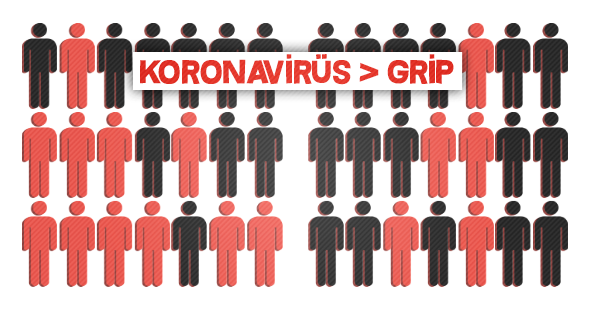
In most cases, the immune system gradually regains control. It kills infected cells, catches viruses trying to infect new ones, and clears the battlefield. The recovery process then begins. Most infected people will recover with relatively mild symptoms, but many cases will become quite critical. We don't know the percentage yet because not all cases have been identified. However, we now understand that this is much more than just the flu.
In more severe cases, millions of epithelial cells die, and the protective wall of the lungs becomes completely ineffective. This means that the alveoli, which help us breathe, can become infected by bacteria that wouldn't normally cause much of a problem. Patients develop pneumonia. Breathing becomes difficult or even impossible, and patients need ventilators to survive. The immune system fights with all its might for weeks, developing millions of weapons against the viruses. The situation becomes even more overwhelming as thousands of bacteria multiply rapidly. They enter the bloodstream and spread throughout the body; if this stage is reached, death is very likely.
Coronavirus, although often compared to the flu, is far more dangerous. While it's difficult to determine the exact mortality rate during an ongoing pandemic, we are aware that it is far more contagious and spreads faster than the flu. For a pandemic like coronavirus, we can foresee two futures: one that spreads quickly and another that spreads slowly. Which future we are forced to face will depend on how we deal with the situation in the early stages of the outbreak. In the case of rapid spread, the consequences will be horrific and cost many lives; a slow-spreading pandemic, however, will be forgotten in the future.
Pandemic and Control
The worst-case scenario for a rapidly spreading pandemic would begin with a very high infection rate, because there are insufficient measures to slow it down. We can illustrate the seriousness of such a possibility as follows: In a rapidly spreading pandemic, we would see many people falling ill simultaneously. If the numbers become too large, the healthcare system may not be able to cope. Medical equipment such as ventilators and healthcare personnel may not be sufficient to help everyone. People may die without treatment, and as healthcare personnel fall ill, the capacity of our healthcare system will inevitably decrease. In this situation, dire decisions will have to be made about who lives and who dies. In such a scenario, the death toll increases significantly.
To avoid this, we must do everything we can to make this outbreak a slow-spreading pandemic. We can slow down a pandemic by acting responsibly enough. Especially in the early stages, we can be more sensitive to ensure that everyone who gets sick receives treatment and to avoid overwhelming hospitals. Since we don't have a vaccine for coronavirus, we need to adapt ourselves. We can summarize this adaptation with two important points.
Don't get infected, and don't infect others!

Although it may sound insignificant, the best thing you can do is wash your hands. Soap is actually a powerful tool. The coronavirus is essentially found within a layer of fat. Soap breaks down that fat, making it impossible for the virus to infect you. It even lubricates your hands, allowing the viruses to be broken down and washed away with the water as you wash them.
Wash your hands as if you've just chopped chili peppers and are about to put on your contact lenses.
The next important point is social distancing, which we may not be very happy about. This means no hugging or shaking hands. If you have the option to stay home, please do so to protect the people who are on duty to keep our community functioning.
From doctors to cashiers, nurses to police officers, we need them all, but they also need our sensitivity to avoid getting sick.
Furthermore, quarantines, travel bans, and curfews may be implemented. While these aren't things we'd prefer, it's important to respect the seriousness of the situation and not act against it. Such measures will save researchers working on treatments and vaccines significant time. So, if you're quarantined, you should understand the reason and respect it. We know it's not fun. But looking at the big picture, we can actually avert a major disaster with a very small cost.
The outcome of pandemics is shaped by how they begin. If they start with a rapid spread, reflected in a steep graph, they end badly. If they start slowly, they progress and end in a way that we can easily overcome. These days, we must remember that the outcome of this pandemic is entirely in our hands. Both metaphorically and literally.
Prepared by: Ayşe Ege Palaz
References 1. Centers for Disease Control and Prevention (CDC), ”Public Health Responses to COVID-19 Outbreaks on Cruise Ships” https://www.cdc.gov/mmwr/volumes/69/wr/mm6912e3.htm?s_cid=mm6912e3_w 2. The New England Journal of Medicine, ” Aerosol and Surface Stability of SARS-CoV-2 as Compared with SARS-CoV-1″ https://www.nejm.org/doi/full/10.1056/NEJMc2004973?query=featured_home 3. Kurzgesagt, “The Coronavirus Explained & What You Should Do” https://kurzgesagt.org/ https://www.youtube.com/watch?v=BtN-goy9VOY&t=130s 4. The Guardian, “How long does coronavirus live on different surfaces?” https://www.theguardian.com/us-news/2020/mar/25/how-long-coronavirus-lasts-on-surfaces-packages-groceries/ 5. Ourworldindata, “Coronavirus Disease (COVID-19) — Statistics and Research” https://ourworldindata.org/coronavirus 6. World Health Organization, “Coronavirus disease (COVID-19) outbreak” https://www.who.int/westernpacific/emergencies/covid-19 7. American Society for Microbiology, “Severe Acute Respiratory Syndrome (SARS) Coronavirus-Induced Lung Epithelial Cytokines Exacerbate SARS Pathogenesis by Modulating Intrinsic Functions of Monocyte-Derived Macrophages and Dendritic Cells” https://jvi.asm.org/content/83/7/3039
Originally published on Medium on March 02, 2025. English translation of “Koronavirüs Nedir ve Ne Yapmalı?”.